What Is Embedded Finance and Why Should Businesses Care?
TL;DR
Embedded finance puts financial services inside products customers already use, making transactions easier and creating new business value.
· It can include payments, lending, accounts, cards, insurance, and money movement inside a platform.
· APIs connect the customer-facing experience with banks, lenders, processors, and other regulated financial infrastructure.
· Businesses can reduce friction, deepen customer relationships, and add revenue without building a bank from scratch.
· Banking-as-a-Service can supply infrastructure, but it is not the same as the embedded customer experience.
· Compliance, partner risk, data security, support, and failure planning still need clear ownership before launch.
Introduction
Embedded finance puts financial services inside a product customers already use. Customers do not need to visit a separate bank or lender. A software platform can add payments, lending, accounts, cards, or insurance through partner infrastructure. That makes finance part of the workflow rather than a separate destination.
Adyen and Boston Consulting Group's 2024 report estimated a $185 billion embedded finance opportunity for SaaS platforms. The report said platforms offering embedded finance can see three to four times more revenue growth. Those figures are report findings, not guaranteed outcomes.
Customer acceptance also matters. Marqeta's 2025 survey found 66% of consumers viewed brands offering financial services positively. The survey covered 3,004 consumers and 1,003 small and medium-sized businesses across the United States and United Kingdom. For businesses, the opportunity is simple: solve a financial task at the moment customers need it.
What Is Embedded Finance?
Embedded finance is the integration of financial services into a nonfinancial product, platform, or customer journey. The financial function appears inside the experience where the customer already works, shops, sells, or manages operations. The underlying service may still come from a bank, lender, insurer, or payment provider.
A restaurant software platform might process payments, provide a business card, and offer working capital from one dashboard. An online marketplace might pay sellers, hold funds, and issue cards without sending users elsewhere. The customer sees one product experience, even when several regulated partners operate behind it.
Embedded finance also changes distribution. Financial services can appear at a specific point of need instead of through a separate sales channel. That context can make the offer more relevant. It can also reduce the steps between a customer's intent and the financial action needed to complete it.
How Does Embedded Finance Work?
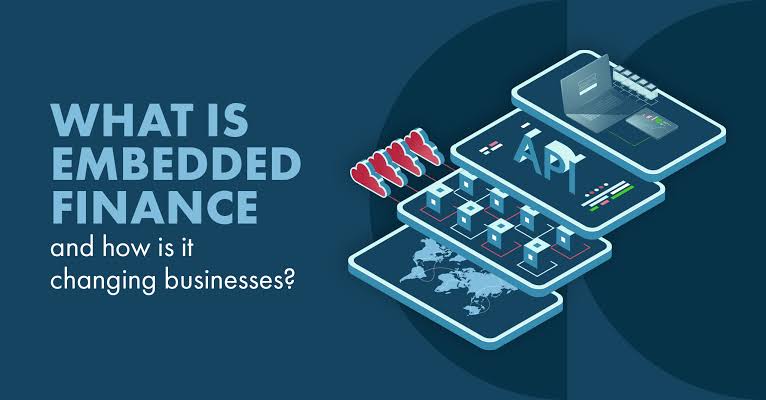
Embedded finance usually works through application programming interfaces, or APIs, that connect a business platform with financial infrastructure. APIs pass approved data and instructions between systems. The customer stays inside the original product. Partner systems handle payments, account creation, card issuing, underwriting, or money movement.
The business normally controls the user experience. A financial institution or technology provider supplies regulated capabilities behind that interface. Depending on the use case, partners may handle identity checks, fraud monitoring, transaction processing, account records, lending, or compliance support.
Data makes the model more useful. A platform already sees relevant activity such as sales, invoices, subscriptions, or transaction history. With proper consent and controls, that context can support faster decisions. As of September 2026, Shopify Capital bases eligibility partly on a merchant's history and interaction with Shopify.
In the United States, Shopify states that its Capital loans are issued by WebBank. That detail shows an important point. The platform owns much of the customer experience, while a regulated financial partner can provide the underlying financial product.
Types of Embedded Finance and Real-World Examples
Embedded finance covers more than checkout payments. Businesses can place several financial functions inside a customer or employee workflow. The right model depends on the problem being solved and the company's risk appetite. It also depends on the partner structure required for the product.
· Embedded payments: A marketplace or software platform lets customers pay, accept payments, split funds, or receive payouts inside the product. The user does not need a separate payment portal.
· Embedded lending: A platform offers financing at a relevant moment. Shopify Capital is one example, with funding offers tied to merchant activity and eligibility.
· Embedded accounts: A platform can offer an account or stored-balance experience that sits beside its core product. The regulated account structure usually comes from a banking partner.
· Embedded cards: A company can issue virtual or physical cards for business spending, rewards, or marketplace payouts. Controls can connect spending rules directly with platform data.
· Embedded insurance: A business can place coverage inside a purchase or workflow. The offer appears where the related risk becomes relevant, such as during travel or equipment purchase.
These models can also overlap. A vertical software company might start with payments, then add financing and cards. The better sequence follows customer needs. Adding several products at once can increase integration work, compliance exposure, and support demands before demand is proven.
Why Should Businesses Care About Embedded Finance?
Embedded finance matters because it can improve customer experience and create revenue without forcing a business to build a bank. The strongest use cases remove a real financial obstacle inside an existing workflow. That can increase product value, deepen customer relationships, and give the platform another way to earn money.
· Less friction: Customers can complete a financial task without leaving the product. Fewer handoffs can reduce abandonment and save time.
· Higher product value: Finance can make the core software more useful. A platform that helps run operations can also help customers get paid or access capital.
· New revenue: Businesses may earn from payment economics, interchange, financing, or service fees. The model depends on the program and partner agreements.
· Stronger retention: Financial features can make a platform more central to daily operations. As of September 2026, Stripe says larger platforms report 80% retention on embedded finance offerings.
· More customer context: Transaction and workflow data can help businesses understand financial needs. That data still needs clear consent, security, and governance.
Stripe also says platforms using its embedded financial services have seen a 40% increase in customer lifetime value. That is vendor-reported performance, not a general benchmark. Businesses still need to test whether a financial feature improves their own retention, revenue, or workflow completion.
Embedded Finance vs. Banking-as-a-Service
Embedded finance and Banking-as-a-Service, or BaaS, are related but different. Embedded finance describes the customer-facing outcome: financial services appear inside a nonfinancial experience. BaaS describes infrastructure that exposes banking capabilities through APIs. A business may use BaaS to build embedded finance, but the terms are not interchangeable.
| Question | Embedded Finance | Banking-as-a-Service (BaaS) |
| What it describes | A customer-facing experience that places financial services inside a nonfinancial product. | Infrastructure that exposes banking functions through APIs and partner arrangements. |
| Main goal | Solve a financial need inside an existing customer or business workflow. | Provide regulated banking capabilities that another company can build into a product. |
| User experience | The user may barely notice a separate financial provider because the feature sits inside the platform. | The infrastructure usually stays behind the scenes and supports the product provider. |
| Typical examples | Embedded payments, lending, accounts, cards, insurance, or business finance. | Account creation, card issuing, payments, ledger services, or other banking capabilities. |
| How they connect | A company can use BaaS as one building block for an embedded finance experience. | BaaS can support embedded finance, but it can also support standalone fintech products. |
What Are the Risks and Challenges of Embedded Finance?
Embedded finance can move financial activity closer to customers, but it also moves financial responsibility closer to the business. A company must understand which party handles compliance, data, fraud, complaints, and operational failures. A polished interface does not remove the regulatory or service obligations behind the product.
· Compliance ownership: Financial products can trigger consumer protection, anti-money laundering, disclosure, licensing, and reporting requirements. Responsibilities must be mapped before launch.
· Partner risk: A program can depend on banks, processors, infrastructure providers, and subcontractors. One weak link can affect service, funds access, or customer support.
· Data risk: Embedded finance can involve sensitive identity and transaction data. Access controls, consent, retention rules, and breach response need clear ownership.
· Operational complexity: Reconciliation, disputes, fraud reviews, account servicing, and error handling can create new work. These processes need staffing and escalation paths.
· Trust risk: Customers may blame the platform when a financial product fails, even when a partner caused the problem. Branding and support expectations need to match that reality.
U.S. regulators have highlighted these concerns. In 2024, three federal banking agencies addressed bank arrangements with financial technology partners. They were the Federal Reserve, Federal Deposit Insurance Corporation, and Office of the Comptroller of the Currency. The agencies pointed to risks involving recordkeeping, compliance functions, complaints, contracts, and end-user access to deposits.
Their message also matters to nonbanks. A partner may carry the banking license, but that does not make the platform's role risk-free. Businesses need clear contracts, controls, monitoring, customer support processes, and contingency plans before financial features become central to the product.
How Should Businesses Approach Embedded Finance?
Businesses should treat embedded finance as a product decision before treating it as a revenue project. Start with one customer problem that already appears inside the existing journey. Then test whether a financial feature solves that problem better than a referral, integration, or separate service.
1. Find the financial friction: Identify where customers pause, leave the product, wait for funds, or struggle to complete a transaction. That moment defines the use case.
2. Choose one starting product: Payments are often the simplest entry point, but lending, cards, or accounts may fit better. Start with the strongest customer need.
3. Map responsibilities: Define who owns compliance, underwriting, fraud, disputes, disclosures, servicing, data security, and customer complaints. Put those duties into contracts and operating procedures.
4. Check the economics: Model partner fees, losses, support costs, implementation work, revenue share, and expected adoption. A feature with weak usage can add cost without adding value.
5. Plan for failures: Design fallback processes for outages, rejected transactions, partner changes, account freezes, and support escalations. Financial problems become urgent for customers.
6. Measure the right outcomes: Track adoption, transaction volume, retention, conversion, support contacts, losses, and customer satisfaction. Expand only when the product proves its value.
A well-designed embedded finance program feels ordinary to the customer. The hard work sits behind the interface. That is why partner selection, product design, compliance planning, and operations matter as much as the API integration.
The Bottom Line
Embedded finance gives businesses a way to place payments, lending, accounts, cards, or insurance inside products customers already use. The opportunity is strongest when the financial feature removes a specific problem and improves the core experience. Businesses should care, but they should start with customer need, clear economics, and disciplined risk ownership.
FAQs
Is Embedded Finance Only for Fintech Companies?
No. Embedded finance can work for nonfinancial businesses that already own a recurring customer workflow. Software platforms, marketplaces, retailers, and business service providers can add financial functions through partners. The strongest fit appears when the feature solves a real problem inside the existing product. A separate finance business is not required.
Does a Business Need a Banking License for Embedded Finance?
Not always. Many businesses work with licensed banks, lenders, insurers, or other regulated providers for the underlying financial product. The exact structure depends on the service and jurisdiction. A partner license also does not remove the platform's operational, contractual, data, or customer-service responsibilities. Legal and compliance advice should match the specific program.
What Is an Embedded Finance API?
An embedded finance API connects a platform with financial capabilities such as payments, accounts, cards, lending, or money movement. The API lets systems exchange approved data and instructions. It does not replace product controls or operational processes. Businesses still need security, compliance procedures, monitoring, support, and clear rules for handling errors.
Can Small Businesses Use Embedded Finance?
Yes. Small businesses often use embedded finance through software platforms they already rely on. They may receive faster payouts, financing, spend cards, or payment tools inside commerce or accounting software. The small business does not build the financial infrastructure itself. Availability, pricing, and eligibility still depend on the platform, provider, and product.
How Is Embedded Finance Different From Open Banking?
Embedded finance delivers a financial service inside another product experience. Open banking centers on permissioned access to financial account data and, in some markets, payment initiation. Open banking can support an embedded finance product by supplying data or connectivity. It does not describe the full customer-facing service, distribution model, or business relationship.
Amrit Mehra
Tech Journalist, Content Writer | TecKnowHowDedicated to providing insightful technology analysis and deep coverage of the latest innovations shaping our global ecosystems.
Liked what you read? That's only the tip of the tech iceberg!
Explore our vast collection of tech articles including introductory guides, product reviews, trends, news, interviews and AI blogs, stay up to date with the latest news, relish thought-provoking interviews and the hottest AI blogs.
Dive into TecKnowHow's treasure trove today and Know Your World of technology like never before!
Disclaimer — Reference to any specific product, software or entity does not constitute an endorsement or recommendation by TecKnowHow nor should any data or content published be relied upon.